

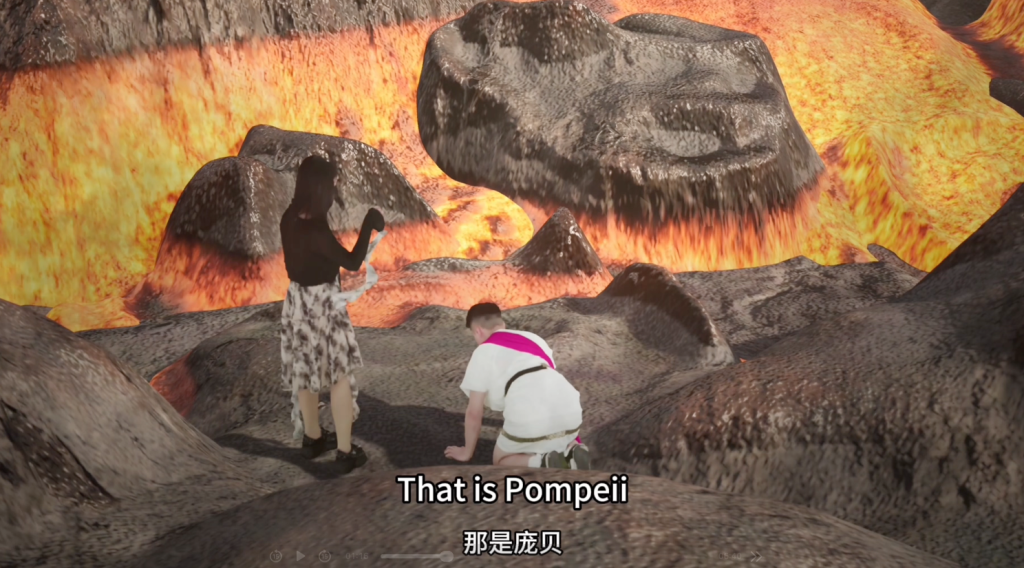
Volumetric Video: Bringing Authentic Performance into the Fall of Pompeii
In the Virtual Production course of our Computing and Media Art program, we created a short film about a time-crossing love story set against the eruption of Mount Vesuvius. The story features spectacular scenes of volcanic destruction, requiring real actors to naturally step into these vast and hazardous virtual environments. In this creative process, our lab’s volumetric video technology played an unexpectedly powerful role.
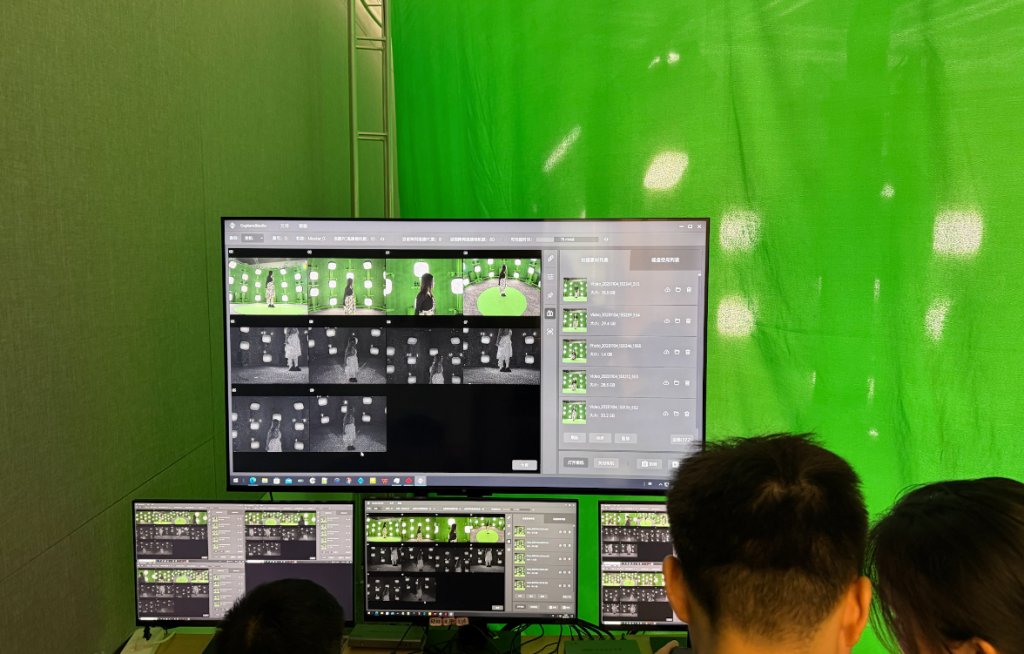
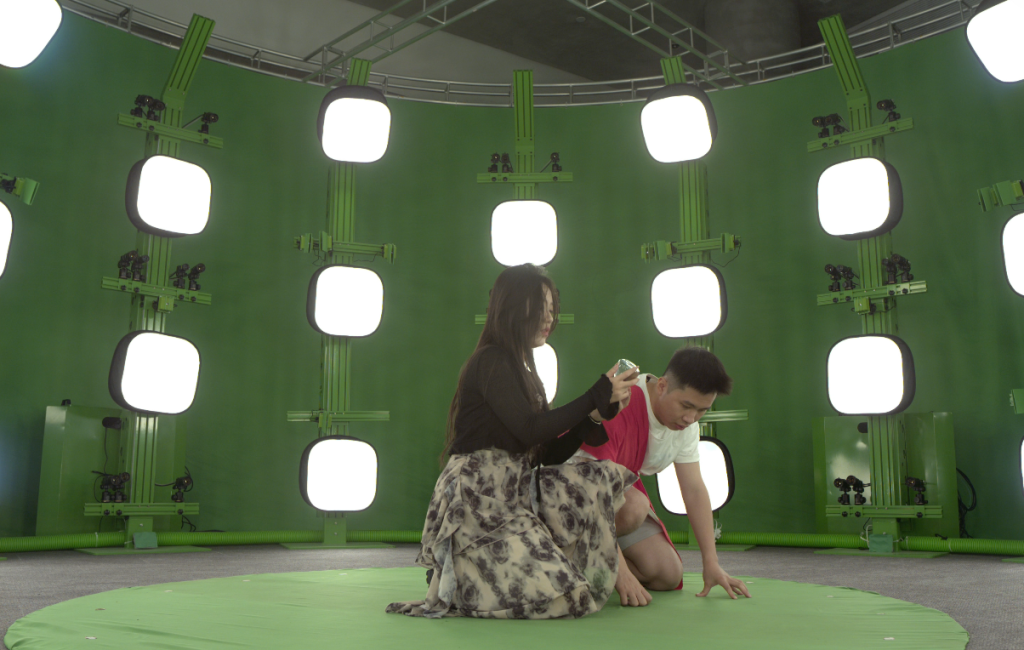
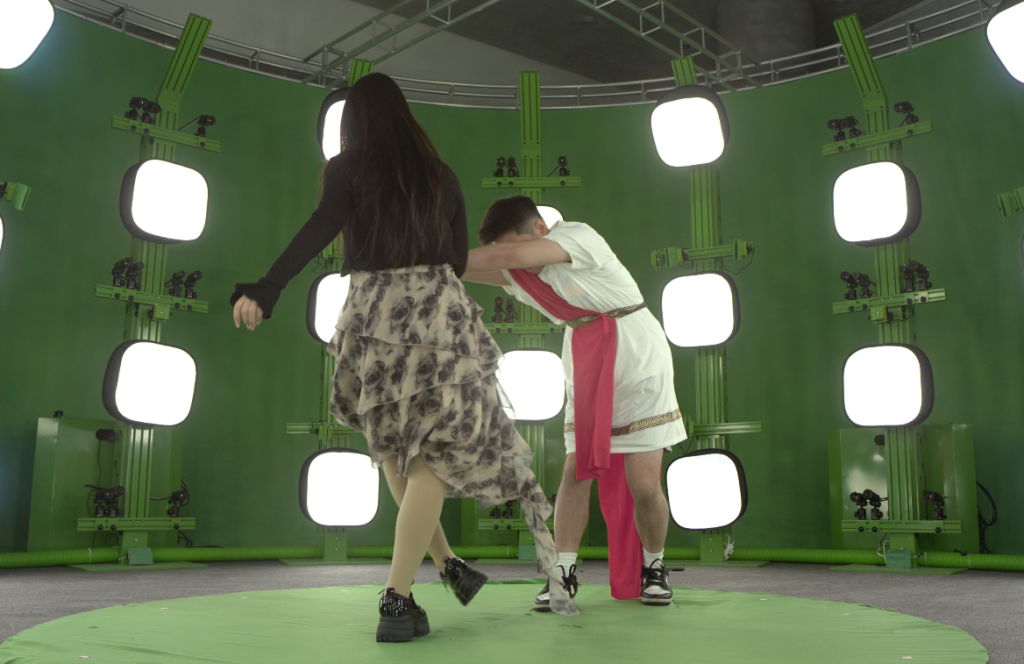
Simply put, volumetric video uses a ring of cameras to record an actor’s performance from all sides at once, then stitches that footage into a 3D moving image you can rotate and view from any angle. It is no longer a flat picture, but more like a living, breathing sculpture. When this 3D figure is placed into the ancient Pompeii we built in Unreal Engine, the red glow of the eruption truly lights the actor’s face, their silhouette fades in and out of the drifting smoke, and the lava below naturally occludes exactly what it should. This sense of unity is very hard to achieve with traditional green-screen compositing — the actor no longer looks pasted into the frame, but truly “standing” there.
It is precisely this quality of a real person existing three-dimensionally in the scene that makes filming extraordinarily free. We can move the virtual camera like a bird, flying around the actor at will: looking down from above, looking up from below, or even circling them amid flying volcanic bombs. Whether capturing a full-body shot of a desperate embrace or a close-up of teardrops in the eyes, every angle maintains consistent lighting and atmosphere, without the usual visual breaks. What is even more precious is that the actor’s subtlest performance — trembling fingers, the tension in a hug, the flutter of sleeves — is all preserved in three dimensions, carrying a warmth and humanity that animated doubles often lack.
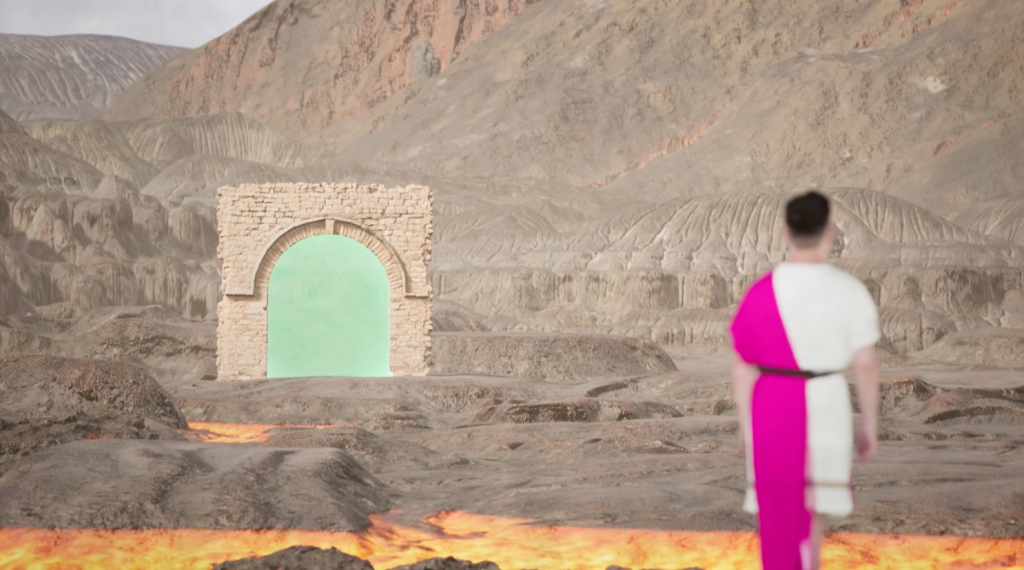
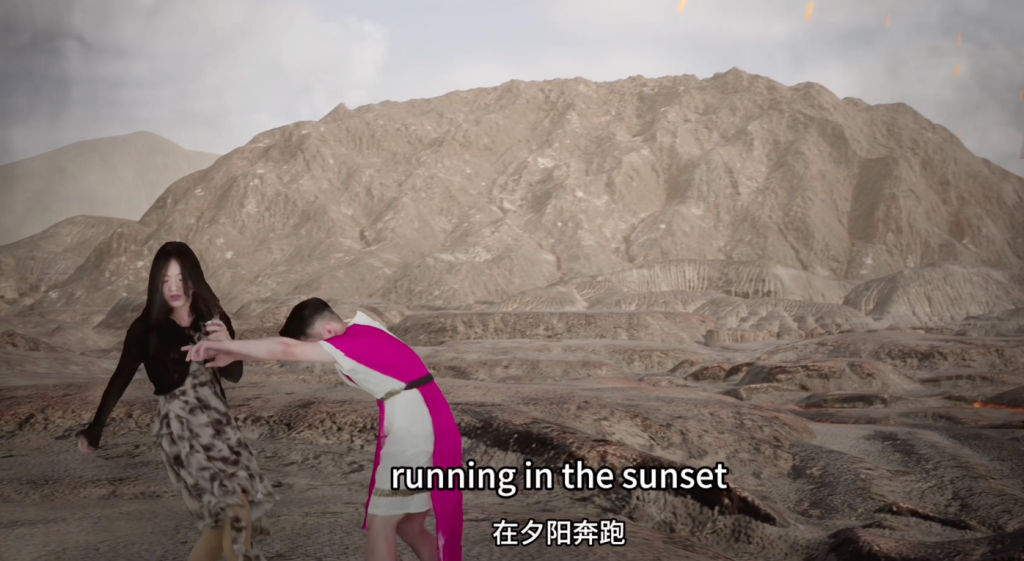
For a small team like ours, volumetric video also brought unexpected ease. In the past, creating such complex scenes would require repeatedly adjusting character positions and lighting by hand, which is time-consuming and easily looks stiff. Now, the actor’s real performance is already “solid”; once placed into the scene, it carries correct light and shadow relationships naturally, sparing us a great deal of manual fixing. This allowed us to pour more energy into storytelling and emotional expression, empowering a handful of students to take on the epic spectacle of a volcanic disaster.
In the end, for us, volumetric video is not merely a labor-saving technique. It frees a love that spans millennia from the confines of a two-dimensional backdrop, allowing the most delicate human emotions to breathe three-dimensionally inside a collapsing virtual world. This perhaps points toward a new possibility in future creation — where real performance can walk with unprecedented freedom into any space we dare to imagine.